News
When the Earth Won’t Rest: The Philippines’ Season of Tremors

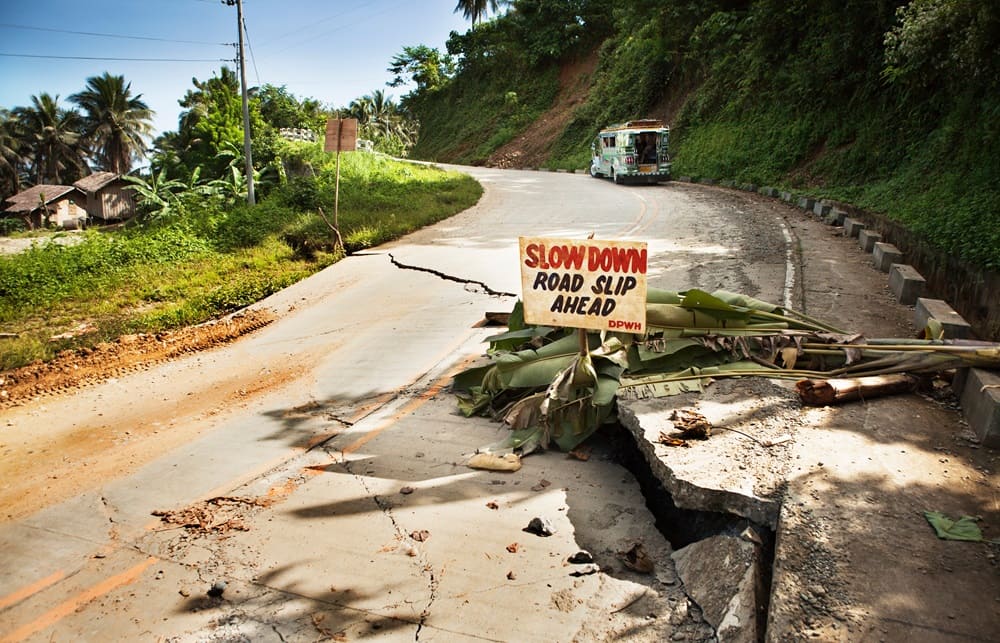
The Philippines has entered what many are calling a “season of tremors.” Since September 30, a series of earthquakes has shaken Luzon, Visayas, and Mindanao, underscoring the country’s precarious position at the heart of the Pacific Ring of Fire.
A Season Defined by Shaking
- September 30, 2025 at 9:59 pm – A magnitude 6.9 earthquake struck Bogo City, Cebu, with its epicenter 18 km northeast of the city at a shallow depth of 5 km. The tremor plunged parts of the province into darkness, caused power outages, and prompted mass evacuations across northern Cebu. Shaking lasted about 30 seconds.
- October 7, 2025 at 8:03 am – A magnitude 5.1 quake jolted Negros Occidental, shaking communities in Western Visayas. While moderate, it was felt strongly in nearby towns and served as a reminder of the region’s seismic vulnerability. Duration: 10-15 seconds.
- October 10, 2025 at 9:43 am – A magnitude 7.4 earthquake (initially reported as 7.6) struck offshore Davao Oriental, with a depth of 23 km. The quake was powerful enough to trigger tsunami warnings and widespread panic. Duration: 45-60 seconds. Also, a magnitude 6.8 aftershock at 7:12 pm followed in the same area, compounding damage and fear that lasted about 20-25 seconds. The Office of Civil Defense reported nearly 478,000 individuals affected across Region XI, with casualties and infrastructure damage confirmed.
- October 11, 2025 at 5:32 pm – A magnitude 5.1 quake struck Zambales, with its epicenter 19 km east of Cabangan at a depth of 112 km. The tremor was felt across Central Luzon but caused minimal structural damage. Duration: 10-12 seconds. Also, a magnitude 6.0 earthquake hit Surigao del Sur, shaking parts of Mindanao at 10:32 pm and adding to the string of strong quakes in the south. Duration: 20-25 seconds
- October 13, 2025 at 1:06 am – A magnitude 5.8 earthquake struck Bogo City, Cebu, once again. Duration: 15-20 seconds, waking residents in Bogo and nearby towns, compounding anxiety from the September 30 quake.
The Ring of Fire’s Relentless Pulse
Stretching 40,000 kilometers around the Pacific Ocean, the Ring of Fire is the planet’s most seismically active zone. Here, tectonic plates collide, grind, and dive beneath one another, producing 90% of the world’s earthquakes.
The Philippines sits squarely on this volatile boundary. Its location at the convergence of the Eurasian and Philippine Sea plates makes it particularly vulnerable to both earthquakes and volcanic eruptions. In 2025, scientists have noted a sharp rise in seismic activity across the western Pacific, with Japan, Indonesia, and South America also reporting significant tremors.
Don’t Panic: Why Remaining Calm Matters
One of the most important rules during an earthquake is simple but powerful: don’t panic, remain calm.
- Panic leads to poor decisions. People who rush for exits or stampede toward stairwells are at greater risk of injury than those who stay put and follow safety protocols.
- Calmness saves seconds. Earthquakes strike suddenly, and the first 10-15 seconds are critical. A calm response allows you to immediately Drop, Cover, and Hold On instead of freezing or running blindly.
- Children and vulnerable groups look to others. When adults remain calm, it reduces fear and anxiety in children, the elderly, and those with disabilities, helping them follow instructions more effectively.
- Emergency response depends on order. Communities that stay calm can evacuate systematically, communicate clearly, and avoid chaos that hampers rescue operations.
As PHIVOLCS and international safety guidelines emphasize, staying calm is as vital as any physical action during a quake. It is the difference between controlled survival and preventable tragedy.
Building a Culture of Preparedness
Experts emphasize three key pillars of resilience that can help communities withstand and recover from earthquakes. The first is household readiness, which involves preparing emergency kits, keeping radios for communication, and establishing clear evacuation plans. The second is community coordination, where neighborhoods and local governments ensure that communication channels remain open and that designated safe zones are identified and accessible. Finally, structural resilience plays a critical role, requiring that homes, schools, and public buildings are designed or reinforced to meet seismic safety standards. Together, these pillars form the foundation of a culture of preparedness that can save lives and reduce the impact of disasters.
Lessons in Resilience
The Philippines’ season of tremors is a stark reminder of the country’s vulnerability, but also of its resilience. Time and again, Filipinos have shown the ability to adapt, rebuild, and support one another in the face of natural disasters.
As the ground continues to shift, one truth remains steady: preparedness is power, and resilience is the nation’s greatest defense.