News
Typhoon Tino Highlights Philippines’ Growing Vulnerability to Extreme Storms

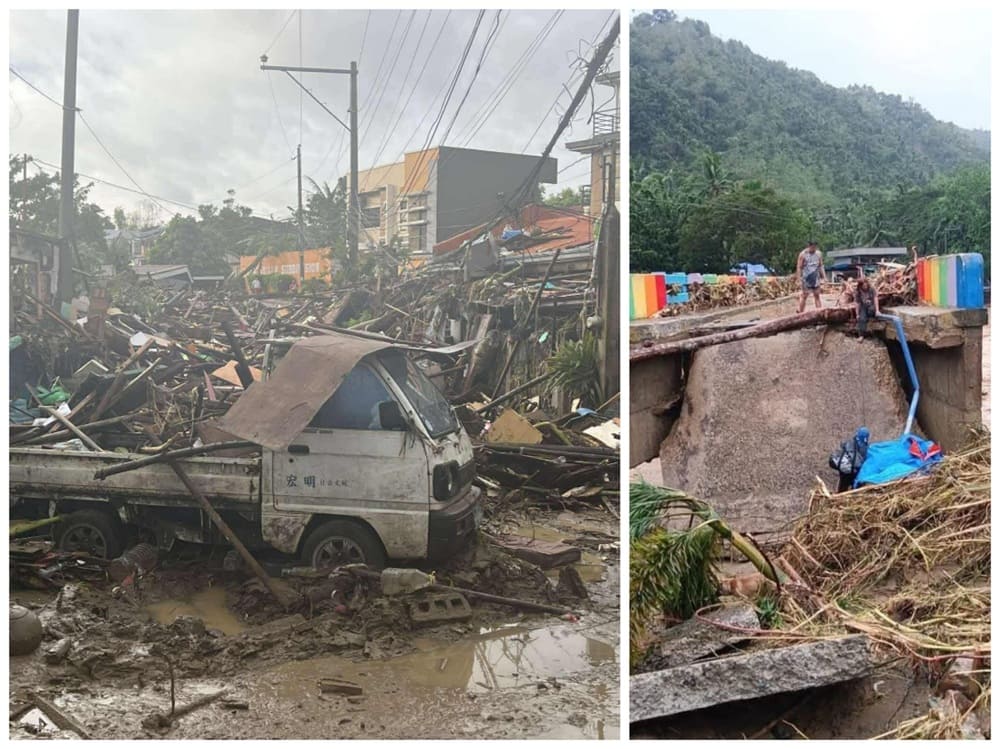
Typhoon Tino, internationally known as Kalmaegi, has once again underscored the Philippines’ precarious position on the frontlines of climate-driven disasters. Sweeping across the Visayas and Palawan on November 4-5, the storm left dozens dead, hundreds of thousands displaced, and entire communities submerged, an alarming reminder of the country’s growing vulnerability to extreme weather events.
Packing maximum sustained winds of 130 kilometers per hour and gusts reaching up to 180 kilometers per hour, Tino also unleashed more than 24 hours of continuous rainfall, dumping over a month’s worth of rain in Cebu and Southern Leyte in just a single day. The relentless downpour overwhelmed rivers, burst through embankments, and triggered widespread flooding that inundated homes, roads, and farmlands.
Rising Human and Economic Costs
At least 48 people were killed in Cebu, with the nationwide death toll climbing to over 60, while more than 348,000 residents sought shelter in evacuation centers and over 700,000 individuals were affected across seven regions. Flooding in Cebu was described as the worst in recent memory, with rivers overflowing and homes swept away. The scale of destruction underscores not only the immediate human toll but also the long-term economic strain on communities already struggling with poverty and fragile infrastructure.
Government Response and Relief Efforts
President Ferdinand Marcos Jr. ordered a whole-of-government mobilization, directing agencies to prioritize rescue operations, relief distribution, and the restoration of essential services.
Preemptive evacuations of more than 175,000 people helped reduce casualties, while the Department of Social Welfare and Development (DSWD) deployed food packs and relief goods as the Philippine Coast Guard and military units carried out rescue operations. The Department of Public Works and Highways (DPWH) began clearing blocked roads, and the Department of Energy (DOE) worked to restore power in blacked-out areas. At the same time, emergency medical teams were dispatched to evacuation centers to prevent outbreaks of waterborne diseases.
A Pattern of Intensifying Storms
The devastation wrought by Typhoon Tino is part of a troubling pattern. The Philippines, located along the Pacific typhoon belt, experiences an average of 20 tropical storms annually, but recent years have seen storms grow more intense and destructive.
Climate scientists warn that warming ocean temperatures are fueling stronger typhoons, while rapid urbanization and inadequate drainage systems are amplifying the risks of flooding and landslides. Cebu’s catastrophic inundation is a stark example of how vulnerable cities remain despite repeated disasters.